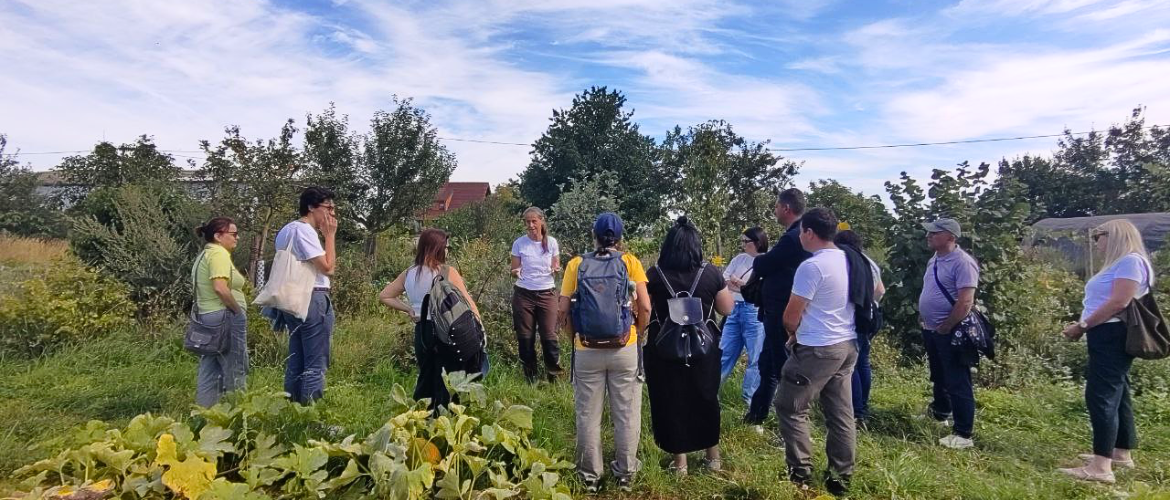
Agroforestry Experience Exchange Visit to Germany
A delegation from Armenia participated in a one-week experience exchange visit to Germany from 25–30 August 2025, within the framework of the “Establishment and strengthening of agricultural cooperatives with the use of improved legislation and modern technologies” project, funded by the Bread for the World and implemented by the “Shen” NGO.
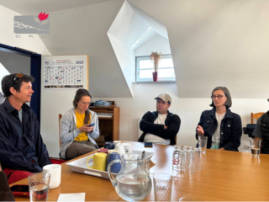
The visit brought together Armenian practitioners, project partners, and local experts to explore Germany’s leading agroforestry initiatives and learn from practical applications of sustainable land-use systems. The program combined field visits, guided tours, and exchanges with German scientists, practitioners, and community members actively engaged in agroforestry development.
Key Learnings and Insights
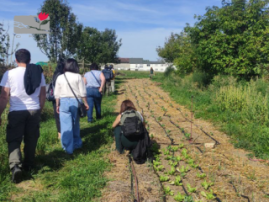
Dynamic Agroforestry in Wiesbaden: Participants observed how agroforestry systems integrate fruit trees, vegetables, and perennial herbaceous plants, thereby increasing biodiversity and soil fertility while reducing external inputs and management requirements.
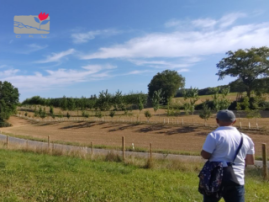
Experimental Sites at Giessen University: The group learned from cutting-edge research on various agroforestry concepts and management practices, including comparisons of complex syntropic systems with simpler approaches, keyline design, and silvopastoral systems.
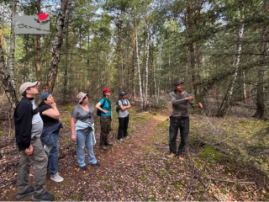
Community-based Agroforestry at Sieben Linden Ecovillage: Exposure to 25-year-old systems and newly established syntropic fields illustrated how community engagement, partly in cooperation with individual farmers of the region, can ensure long-term sustainability, biodiversity conservation, and resilience to drought.
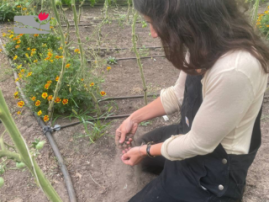
Keyline Design and Rotational Grazing at Wilmar’s Gaerten: The Armenian team studied innovative integration of keyline design with rotational livestock systems, enhancing both soil health and productivity. The Armenian team also observed the simple agroforestry design with only a few species for cost efficiency in large-scale farming, as well as the market gardening design, practices, and operations.
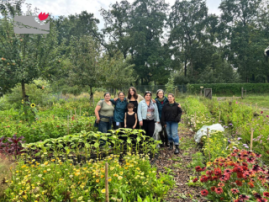
Importance for Armenia
The lessons learned are directly relevant for Armenia’s efforts to restore degraded lands, introduce climate-smart practices, and build resilient rural economies. The exchange highlighted practical approaches to:
Strengthen community participation in agroforestry establishment and maintenance.
Show that agroforestry systems can be adapted to local conditions and resources available while targeting specific goals.
Improve soil and water management through key line systems.
Diversify rural incomes with multi-strata systems: perennial crops, timber, and fruit varieties.
Enhance climate resilience by adapting agroforestry models to drought-prone and degraded areas of Armenia.
Improve land productivity and bring back degraded agricultural lands into cultivation/use.
Looking Ahead
The knowledge gained during the visit will also be integrated into the "Forest Restoration and Climate Change in Armenia" (FORACCA) project, funded by the Swiss Agency for Development and Cooperation (SDC) and implemented by “Shen” NGO across Armenian marzes, particularly in Aragatsotn, Syunik, Lori, and Shirak. Through adaptation of tested European approaches, FORACCA aims to scale up agroforestry systems that improve livelihoods while contributing to the mitigation of climate change.