Ahead of COP17: “Agroforestry for Biodiversity” Community Festival in Lernavan
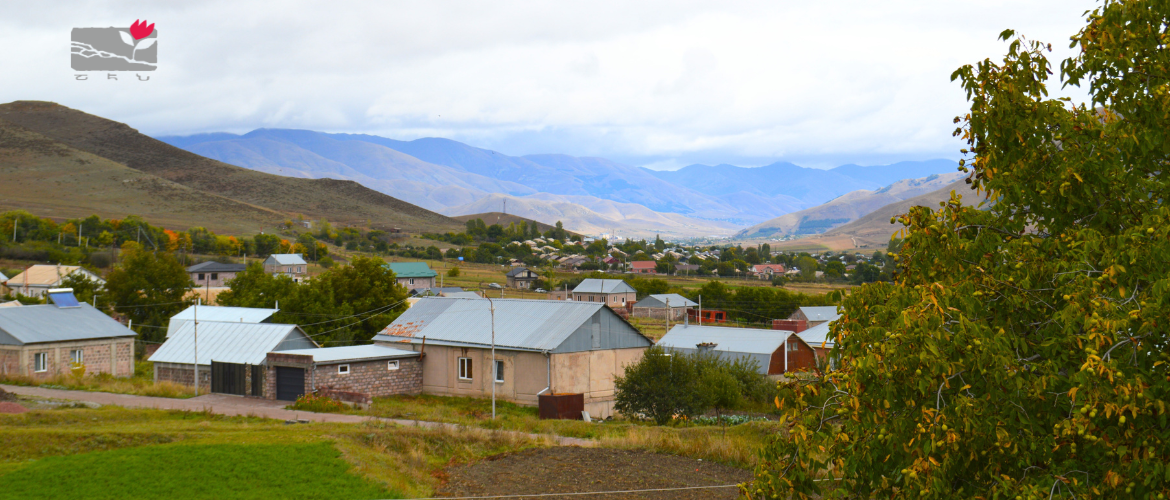
How can trees, birds, and even small predators become farmers’ allies? And how can a schoolyard turn into a fascinating place to discover biodiversity? These were the questions explored on October 3 by residents and children of Lernavan village in Lori Province, Armenia, during the “Agroforestry for Biodiversity” community festival, initiated by the “Shen” NGO and organized with the active support of volunteers from the German ASA Programme.
The event was held ahead of COP17, to be hosted by Armenia. Its aim was to bring the global biodiversity agenda closer to rural communities, raise awareness of the importance of nature conservation, and demonstrate how agriculture and biodiversity can complement and support one another.
Lernavan was a natural choice for the event. Since 2025, “Shen” has been supporting the establishment of an agroforestry site in the village, with the involvement of a local initiative group and community members. This initiative creates opportunities to develop practical approaches to sustainable land use and nature conservation within the community.
When Nature Becomes a Farmer’s Ally
For farmers from Lernavan and surrounding communities, the day began with a screening of the award-winning short documentary “Vidas Suspendidas”. The film explores the traditional Spanish agroforestry system known as Dehesa, illustrating the close relationship between soil health, agricultural practices, and biodiversity.
As part of the event preparations, “Shen” translated the film into Armenian with the filmmaker’s permission. “Vidas Suspendidas” is now also available with Armenian subtitles, making this inspiring agroforestry experience accessible to Armenian-speaking audiences.
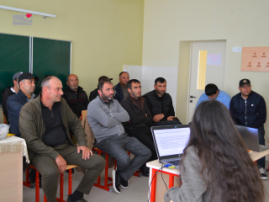
The screening was followed by a lively discussion, allowing participants to reflect on the Spanish experience and compare it with the realities of rural communities in Armenia.
One farmer’s experience was particularly noteworthy. He shared that he had relied on chemical pesticides for many years but was now trying to transition towards biological pest control methods. He also expressed a strong interest in professional literature on sustainable agriculture and in the training courses organized by “Shen” for agricultural consultants.
His story captured one of the day’s central messages: the journey towards sustainable agriculture begins with curiosity, a willingness to learn, and a readiness to work with nature rather than against it.
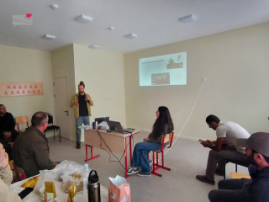
The discussion continued with a presentation by “Shen”’s agroforestry expert, who explained the important role of trees on agricultural land in conserving biodiversity, strengthening ecosystem stability, and improving resilience to climate change.
Practical examples of natural pest control also sparked considerable interest. “Shen”’s agroforestry specialist demonstrated how installing perches for owls or creating stone piles to provide shelter for small predators, such as weasels, could help regulate pest populations naturally in Lernavan, reducing the need for chemical pesticides.
These simple yet compelling examples illustrated that biodiversity is not only something we need to protect; it is also a valuable natural partner in agriculture.
Nature Through Children’s Eyes
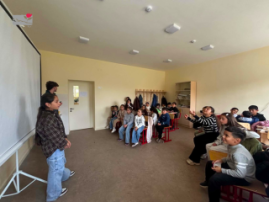
While adults were exploring the possibilities of agroforestry, a different but equally exciting journey of discovery was unfolding at Lernavan School.
Children aged 5-13 were introduced to biodiversity through games, observations, and creative activities.
When asked what biodiversity meant to them, the children spoke about nature, animals, flowers, and the living world around them. Their answers revealed that they already perceived nature as an integral part of their everyday lives.
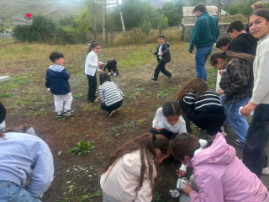
They also watched excerpts from “The Lorax”, an animated film about protecting nature, before taking their curiosity outdoors into the schoolyard.
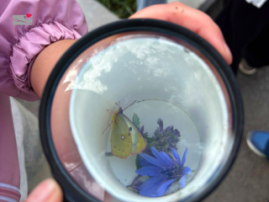
Armed with magnifying glasses, the young explorers began searching for and observing living organisms in their surroundings. They discovered that there is no need to travel far to encounter fascinating wildlife. Sometimes, all it takes is a closer look at the ground beneath our feet or the plants growing nearby.
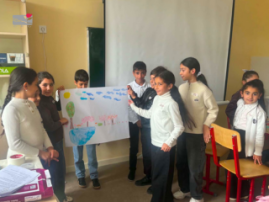
The children were also invited to imagine and draw the kind of natural world they would like to see. Through their creativity, a colourful, diverse, and thriving ecosystem gradually took shape on paper, filled with plants, flowers, and animals.
And perhaps this was one of the day’s most beautiful discoveries: in the children’s imagination, a healthy natural world was rich, diverse, and full of life.
One Community, Different Generations, One Shared Goal
The volunteers from the German ASA Programme made an especially valuable contribution to the preparation and implementation of the event. With enthusiasm, creativity, and dedication, they supported the organizational work as well as the educational and interactive activities for both adults and children. Their involvement was a wonderful example of international volunteer cooperation, bringing together different experiences and ideas around the shared goal of biodiversity conservation.
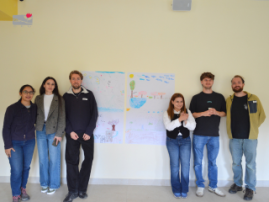
At the end of the day, adults and children came together for a shared lunch, exchanging impressions, new knowledge, and discoveries.
Throughout the event, they had approached biodiversity from different perspectives: farmers through agricultural experience and discussions of practical solutions, and children through play, observation, and creative imagination.
Yet they were all united by the same idea: protecting nature begins with getting to know it, understanding it, and appreciating its value.
Held in Lernavan ahead of COP17, this community event highlighted once again that global biodiversity conservation goals can take on real meaning at the local level - in a farmer’s field, at a village agroforestry site, or in a schoolyard.
Biodiversity is not found only in distant forests or protected areas. It is all around us, woven into our everyday lives, and its future also depends on the choices we make each day.