Swiss Development Cooperation Delegation Visits Agroforestry Pilot Sites in Bazum and Lernavan
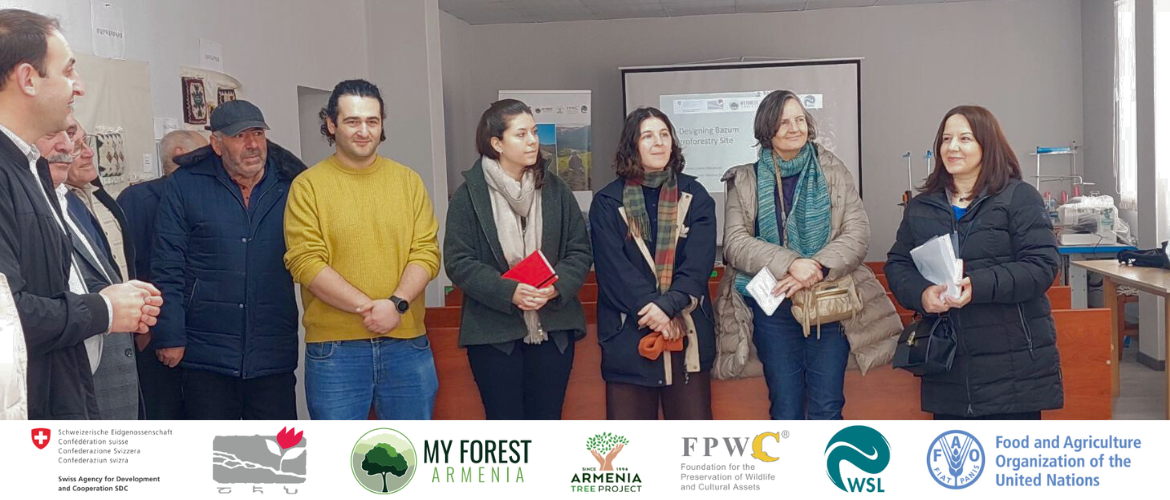
On March 17, 2026, a delegation from the Swiss Agency for Development and Cooperation (SDC), led by Deputy Head of Mission and Deputy Regional Director of Swiss Cooperation South Caucasus, Mrs. Ursula Läubli, and SDC Programme Manager for the South Caucasus, Mrs. Irina Peyer, visited the villages of Bazum and Lernavan in Lori Province. As part of the Swiss-funded FORACCA project, “Shen” NGO is currently implementing agroforestry systems in close cooperation with local initiative groups established in each community. Shen staff presented the activities carried out on the ground and facilitated meetings with community representatives.
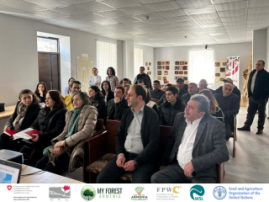
The discussions showed strong motivation among local communities in Bazum and Lernavan to restore degraded lands, diversify their livelihoods, and develop sustainable agroforestry systems. These efforts contribute to environmental protection, economic resilience, and overall community development.
Visit to Bazum
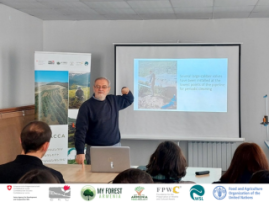
The visit began in Bazum village, where the delegation observed the work carried out by the “Shen” NGO in recent years. During the presentation, the Shen team highlighted the renovation of the water pipeline and Bazum’s connection to the regional water network. This improvement enabled villagers to regain reliable access to water. As a result, agricultural activities in the village were revived, leading to the creation of the first local agricultural cooperative, “Bazum Vitamin.”
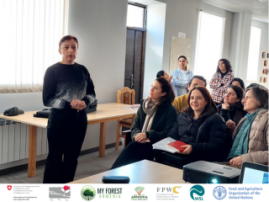
Local representatives, including the deputy head of the Pambak Consolidated Community, Mr. Alanyan, and the administrative head of Bazum, Mr. Tsatouryan, also addressed the delegation. They emphasized the long-standing cooperation between “Shen” NGO and the Bazum community, as well as the positive impact of the organization’s work on local livelihoods.
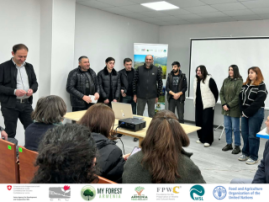
Members of the current initiative group, formed to establish the agroforestry site in Bazum, introduced themselves and shared their motivations for joining the project. The group expressed strong interest in developing the site not only for agricultural production but also for future agro-tourism opportunities in the village.
The agroforestry system planned for Bazum follows an agro-silvo-pastoral approach. It integrates forest tree species, pasture and forage species, and livestock. This system aims to restore degraded land while providing fodder and planting tree species that improve soil fertility, increase water retention, and support biodiversity. It is especially suitable for grazing and semi-natural lands, where livestock production remains an important part of local livelihoods.
Visit to Lernavan
The delegation then continued to Lernavan, where “Shen” NGO is implementing another agroforestry site within the FORACCA project, in collaboration with the local community. The delegation was welcomed by the village initiative group, with whom Shen has worked closely to design the system based on community needs and priorities.
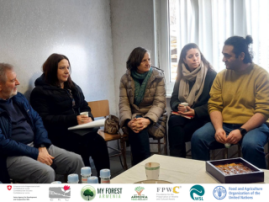
Members of the initiative group presented the activities carried out during the first year of the project. These included the donation of 7,000 pine seedlings by the local community, which were planted on the site as part of restoration efforts. They also presented the site map developed by the “Shen” NGO in close consultation with the group. The map shows the layout of the future agroforestry system, including the selected tree and crop species.
The agroforestry system designed for Lernavan follows an agrosilvocultural approach. It combines forest trees, perennial crops, and annual crops within the same area. This system supports ecological restoration while also enabling diversified agricultural production. It helps generate income and improves biodiversity, soil health, and microclimate regulation.
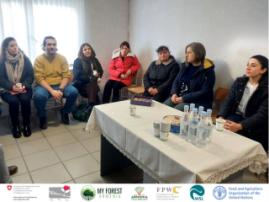
Women members of the initiative group highlighted their active involvement in both past and upcoming project activities. They underlined the important role of women in community-based natural resource management and agroforestry development.
Due to unfavorable weather conditions and heavy snow, a detailed field visit to the agroforestry site in Lernavan was not possible. However, the delegation was able to observe the site from a distance, gaining a clearer understanding of the work already completed and the activities planned for the next phase.
The visit provided an important opportunity for the SDC delegation to meet community members, initiative groups, and the Shen team in the field, and to observe the progress of agroforestry activities under the FORACCA project.
“The Forest Restoration and Climate Change in Armenia” (FORACCA) project is funded by the Swiss Agency for Development and Cooperation (SDC) and co-funded by the four implementing organizations under the Forest Alliance of Armenia, including Shen NGO, Armenia Tree Project NGO (ATP), My Forest Armenia NGO (MFA), and Foundation for the Preservation of Wildlife and Cultural Assets (FPWC). The project is implemented in collaboration with the Swiss Federal Institute for Forest, Snow, and Landscape Research (WSL) and the UN Food and Agriculture Organization (FAO).